
The Performance Shift
2026 Workplace Insights
Workplace performance can’t be measured in square feet per person, badge swipes, or number of widgets produced. It is unique to each company based on what drives them —speed to market, ideas generated, problems solved, and bonds formed.
In 2020, the rapid shift to remote work raised a fundamental question: do we still need an office? By 2023, while some companies thrived remotely, many began to see challenges emerge — even as employees valued the productivity of personalized home environments. In response, organizations introduced new policies and perks to encourage a return to the office, bringing heightened expectations for what the workplace should deliver.
Looking ahead to 2026, the focus is expected to move away from chasing the “newest and best” and turned toward performance measured by company-specific metrics. Instead of following industry trends, organizations will rely on internal diagnostics to guide improvements, embedding measurable, culture-driven initiatives that create a tailored competitive advantage.
Culture & Teams
NOW: Creating all-hands and large meeting spaces for in-person gatherings
NEXT: Curating an experience for learning and cultural connection
Today, many of our clients consider large gathering spaces to be a critical component of an office that encourages meaningful attendance and in-person meetings. We are seeing more clients recognize that a feature-rich room is not enough. The real value comes from the programming and events that are hosted in them.
More than just a large room, these spaces typically require sophisticated AV systems, flexible furniture, top notch hospitality offerings, and ambiance that encourages social interaction. But no one wants to dedicate that much expensive real estate to something that is only used for a quarterly stand-up, so it must have a greater purpose, supporting other functions on a day-to-day basis.
High performing events are more than a meeting invite, room reservation, and a slide deck. They are carefully planned, end-to-end experiences curated with a specific intention in mind. Even a simple ice cream social can be more than mid-afternoon entertainment. It is an opportunity for meaningful employee connections and catalyst for inter-departmental collaboration. Teams that really ‘know’ each other perform better — social cohesion builds trust and creates measurable business outcomes. They have 50% higher productivity, in fact, according to Chris Kille’s article in the Harvard Business Review.
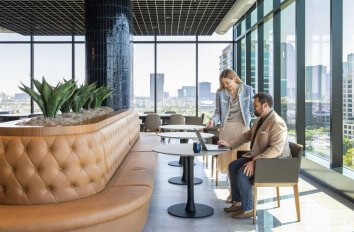
People spend more time at work than they do at home...so, we want people to want to come into the office, enjoy working with their peers and their colleagues.
And I think you have to provide a space that enables that, the space that promotes creativity and innovation and collaboration.
Collaboration
NOW: Connecting from anywhere and in any way possible
NEXT: Adjusting for effectiveness, reducing meetings and adapting collaboration methods
Collaboration today happens anywhere and everywhere. No longer tethered to an office building or even a desk, technology is facilitating most communication and enabling unlimited access. Now, the collaboration issue to solve is quality. An issue that’s digital, physical, and operational, it will require holistic solutions.
Calendars full of meetings, hybrid calls that drain energy, and too many communication channels are issues that have a real impact on employee experience. We’ve solved access (maybe too well). Now, the collaboration issue to solve is quality. An issue that’s digital, physical, and operational, it will require holistic solutions.
In 2026, we expect to see a resurgence of analog collaboration — whiteboards are back. Leaders and their teams increasingly recognize the value of stand-up problem solving and rapid decision making and are demanding spaces which make this type of collaboration easy. Some are even intentionally leaving devices behind to eliminate digital "background noise" and bring back true presence. This isn't anti-technology, it’s pro-quality.
For design, that translates into more settings dedicated to quick alignment and in-person brainstorming. We'll see more writable walls, project rooms, pin-up zones, and "leave your device behind" moments that reduce device dependency. It's a deliberate rebalancing towards collaborative behaviors that were lost in the digital transition, as teams see that they perform better when the environment supports genuine, embodied teamwork.
Wellness
NOW: Emphasizing comfort and care with on-site wellness events and healthy perks
NEXT: Linking employee health and belonging with organizational performance
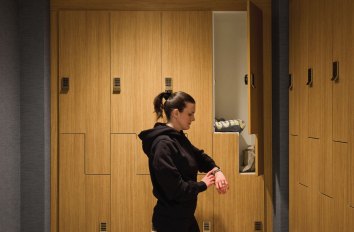
After the initial shock of remote and hybrid working, many companies have signaled care through perks and programs like wellbeing events, healthy snacks, wellness challenges, and even certifications. As we move forward we will see wellness shift from a perk to infrastructure, with the workplace becoming a tool that allows people to regulate energy throughout the day.
In 2026, wellness is no longer a ‘nice extra’ offered as an employee benefit. Organizations are under pressure to get the best out of their people in a sustainable way, creating a workplace that protects energy and reduces friction in the flow of work.
That means controlling for comfort (acoustics, privacy, temperature, light, air quality), confirming employees can focus and recover (quiet decompression spaces, lower-stimulation zones, access to outdoors, places to reset between intense work sessions), and building nutrition and hydration into the everyday. Just as importantly, wellbeing is increasingly tied to belonging and team health. Loneliness and exclusion (particularly prevalent in hybrid models) can quietly drive burnout and attrition. Organizations will seek to use the workplace to counter this through inclusive settings, and everyday collaborative moments — which make connection easy and natural.
Hugo's Focus by Design research helps companies strategically design for neurodiversity and focus.
Experiences
NOW: Incorporating character, depth, and values rather than applied branding
NEXT: Emulating sought after places with immersive experiences
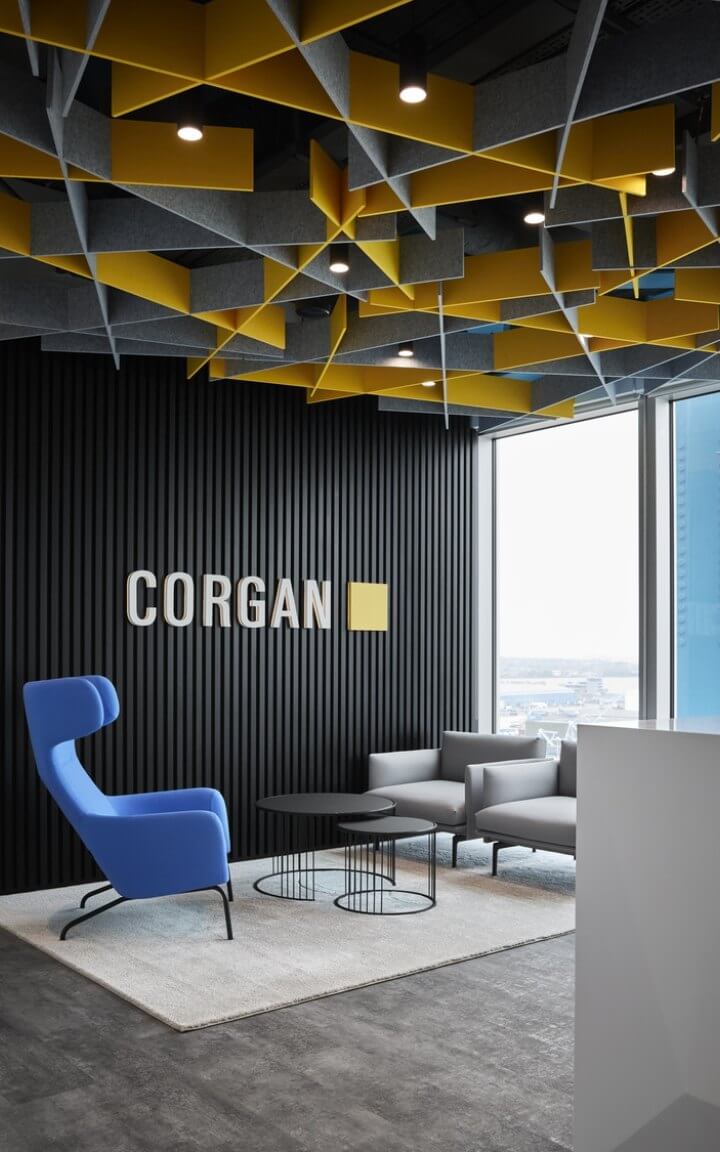
The standard, corporately-branded office is fading into the past. Many of our clients are asking for more than a logo behind a desk and some feature walls. Instead, workplaces feature layered designs, thoughtful accessories, and nuanced details that express a company’s values and purpose. An immersive experience takes the workplace to the next level, creating a sense of place for visitors, a differentiator for new talent, and a compelling reason to come to the office.
Layers of intentionality that are unique to each organization create a distinct and meaningful workspace that doesn’t just draw employees in once, but again and again. Spaces with this kind of depth invite employees to linger, discover, and connect.
More than a backdrop for work, this type of purposeful design has been shown to drive tangible organizational outcomes such as higher engagement, lower turnover, and stronger productivity. According to a peer-reviewed study by Knight & Haslam, employees achieved up to 32% higher productivity and 45% higher wellbeing in enriched (art and plants) environments.
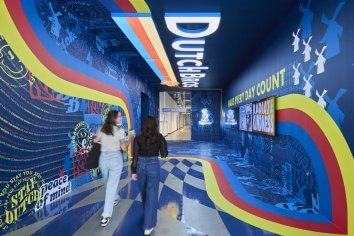
Want people to feel they are getting a high level of service? Create a hospitality lounge with beverage service and a personal greeting. Do your teams thrive in a coffee shop atmosphere? Create a work café in a bustling part of the office with music and outlets everywhere. Or if you’re like our client Dutch Bros, where coffee meets rock and roll, you start your day passing through a hype tunnel.
What these all have in common is they amplify the company’s authentic culture and create a memorable moment that sets the tone for their time in the workplace.
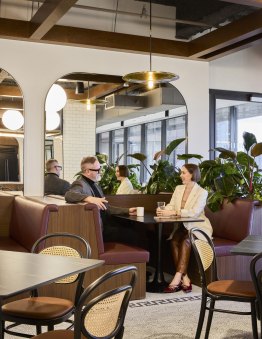
Corgan struck the balance of creating a beautiful space, and really having it tie to New York.
There's been an incredible shift from our old office to our new office, and it's because of the intentionality we sought — and Corgan helped us execute.
Technology
NOW: Utilizing space analytics systems to address operational challenges
NEXT: Predicting user needs with AI-powered ecosystems
For now, logging into a data dashboard is on someone’s to-do list. In the future, AI could actively monitor trends, send alerts to service personnel, and suggest interventions to improve the employee experience.
Today, companies are using tools like occupancy sensors and space analytics to tackle workplace and operational challenges. These systems monitor attendance and predict high-traffic days to anticipate needs and scheduling additional food and beverage services — like coffee carts during peak demand.
Rather than displaying more information, the technologies of the future will be more like driver assistance, playing a proactive role in creating a smoother journey. Many companies have integrated smart technologies to a number of systems to both improve operations and enhance the employee experience. Biometric scanners allow employees to pass seamlessly through digital turnstiles. An app offers not only ease of locating a conference room, but also food ordering and coffee on demand.
By analyzing growth trajectories, adoption patterns, and behavioral shifts, we look beyond today's tools to anticipate what's next.
Sustainability
NOW: Operational focus, prioritizing management and reporting of energy, waste, and water metrics
NEXT: Human focused, prioritizing environmental quality through integrated design and post occupancy
To date, most sustainable initiatives have been focused on operations, but we are seeing a major shift towards a ‘people-first’ approach to sustainability. This new approach focuses on optimizing the comfort and performance of occupants within the space.
Looking beyond carbon and resource efficiency, to deliver human focused sustainability.
Integrated Design: The benefits of integrating healthy materials, smart controls, air quality, climate resilience, and biophilic designs are well understood. Working with our partners, we help our clients integrate these strategies into our designs to provide long term worker satisfaction.
Consulting & Advisory: Post-occupancy evaluation avoids the pitfalls of the "set and forget" mentality, which assumes design and execution alone are enough to guarantee that a workplace will meet people's needs and expectations. We support our clients through real world analysis to find issues and propose remedies to confirm their investment delivers on worker satisfaction and productivity for the long-term.
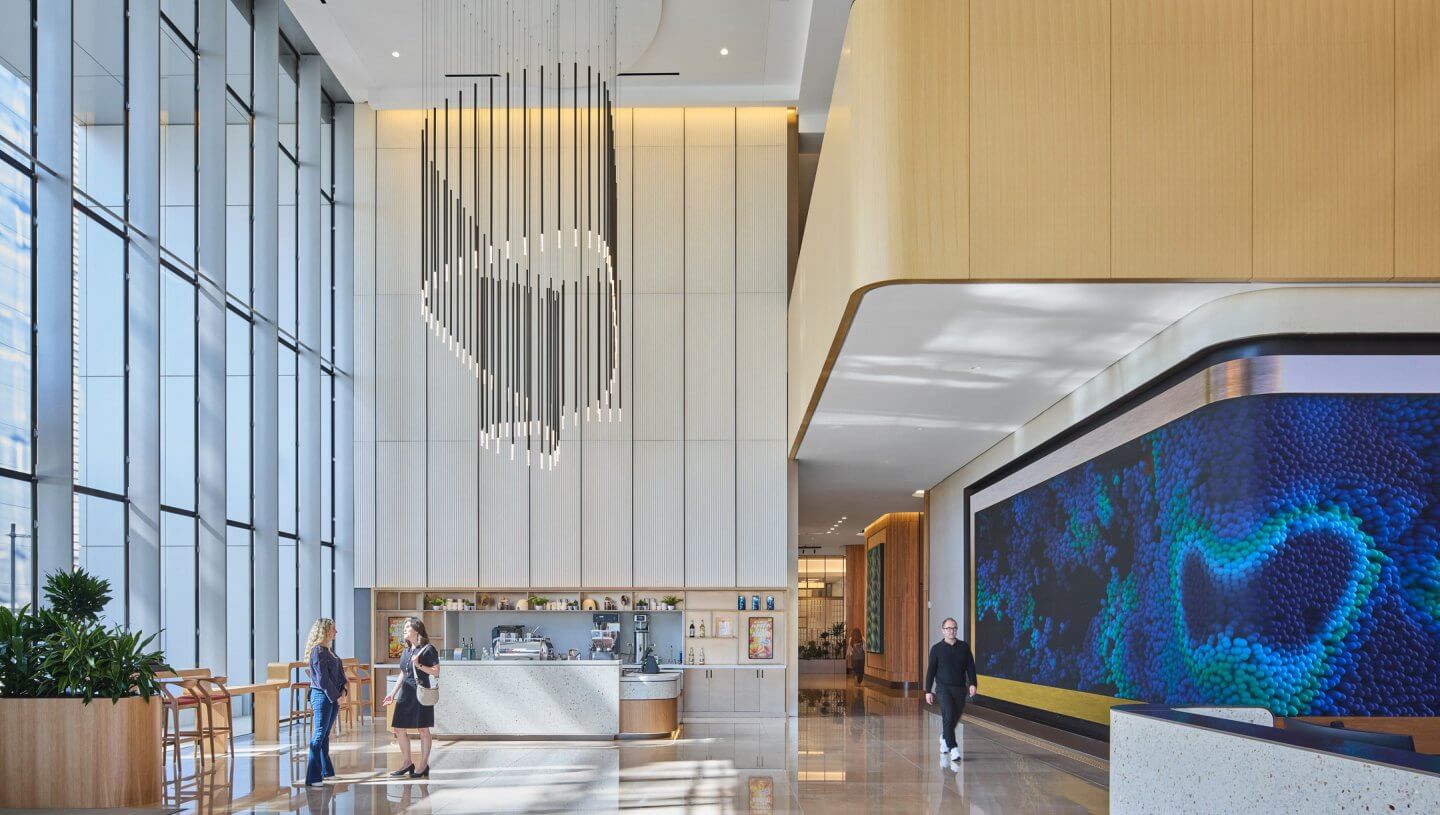
A high performing office is both effective and experiential
As we shift away from the "race for the newest and best" towards company-specific performance, how will you measure up?