Whitney Museum of American Art
Project Stats
- Location
New York, New York
- Size
220,000 SF
- Role
Executive Architect
- Awards
- Market
- Expertise
Should I stay or should I go
After nearly 50 years in its Marcel Breuer-designed building, the Whitney Museum of American Art had outgrown the 61,000-square-foot space in New York City’s Upper East Side.
The Whitney connected with the firm to determine how it would continue to expand and where it would reside. The team initially performed an analysis of the museum’s existing program, assessed its desired program, analyzed the zoning and landmark district implications, provided bulk/area design options, and made recommendations for expansion. This scheme for expansion received landmarks approval, but limitations of the site led the museum to ultimately pursue the development of a new building that allowed for more generous exhibition space.
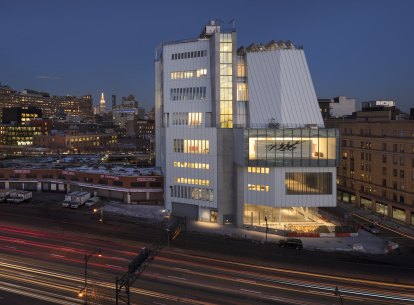
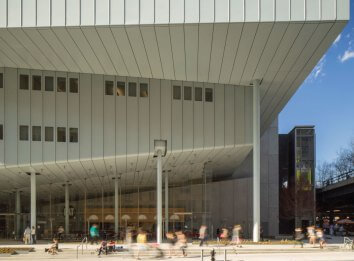
The Whitney selected a site adjacent to the southern terminus of the High Line in the Meatpacking District and selected Renzo Piano Building Workshop in collaboration with Cooper Robertson as architects for the project.
A brand new start of it
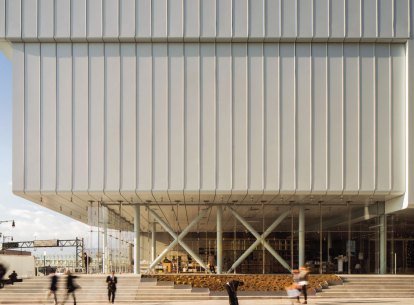
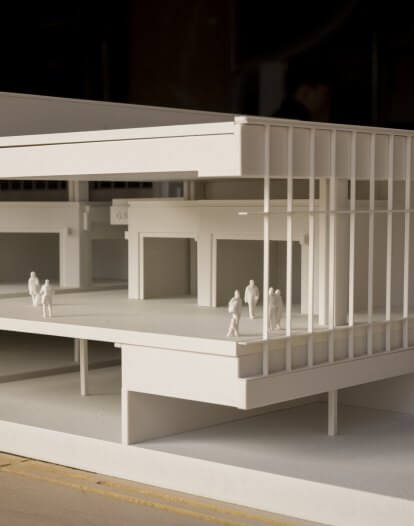
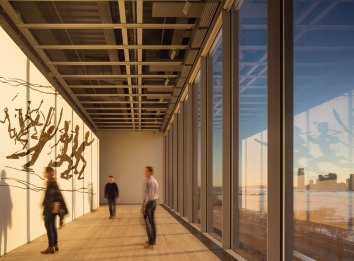
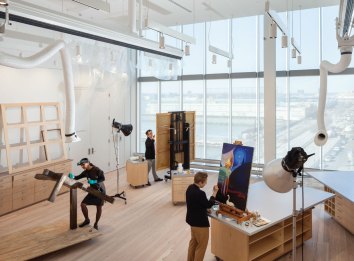
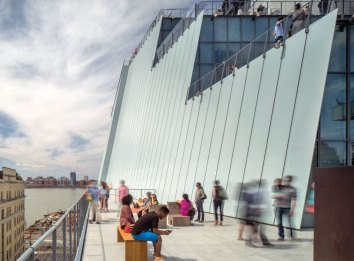
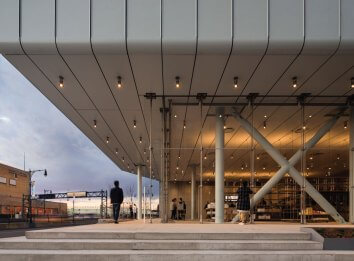
Located on Gansevoort Street, the new building places the Whitney at the epicenter of New York’s newest cultural district. The building stacks the program in six stories and responds to its low-rise neighbors with a series of terraces that step back from the adjacent elevated High Line park. A public plaza creates a vibrant street-level entrance with generous outdoor gathering space and an adjoining restaurant. In addition to the 50,000 square feet of bright, double-height galleries overlooking the Hudson River, the design features an education center and research library, art storage and conservation labs, office/support space, a museum shop, an informal café, and a 200-seat theater for public programs. Completed in spring of 2015, the new building was the first LEED Gold-certified museum in New York City.
Prepared and resilient
The location of the new Whitney Museum of American Art adjacent to the Hudson River is particularly sensitive to water level rise and storm surge. The design of the building anticipates the effects of climate change and protects the Museum’s staff and collection from water level rise. In the original design, the team elevated the lobby an additional one foot above the FEMA recommended nine feet elevation to 10 feet. All art galleries begin on the fifth floor and extend upward with no permanent gallery or art storage below level five. When Superstorm Sandy hit New York City in October 2012, the museum was well under construction and basic elements of the building’s design were already in place to protect the structure in the case of flooding. The timing of the storm enabled the team to observe how the building could withstand a serious flooding event. The structure withstood the storm well, but the unprecedented high water levels brought over six million gallons of river water into the building’s 30-foot deep basement.
As a result, the project required extensive flood mitigation efforts. Working with international storm surge experts, the new recommendation was to protect the building up to 16.5 feet. Mitigation efforts included 10-inch thick aluminum plate floodgates that lock into steel plates embedded in the walls at the street-level loading dock and staff entry doors on the west side of the building. Critically, these floodgates are able to be operated by just two employees in case of emergency. The strategy also includes a temporary barrier wall protective system at the buildings perimeter to be deployed within 24 hours of a storm event. In the extreme case of a flood above 16.5 feet, the structure is designed to withstand both flooding at the lobby level and the force of any debris moved by a storm.
This project was completed by Cooper Robertson prior to its acquisition by Corgan in November 2025.
Awards
2016 AIA New York Award of Merit in Architecture
2016 MASterworks Design Awards Winner
2015 AIA New York State Design Award of Merit
2015 PCI Design Award
2015 Society of American Registered Architects Special Award
2015 Greater New York Construction User Council Award, Cultural Category