
How Residency Reshaped Is Reframing Multifamily Design
The Residency Reshaped report — a joint effort by Corgan’s research and innovation team, Hugo, and its multifamily residential practice — provided a data-driven framework to help stakeholders navigate the evolving housing market in six Sunbelt cities. Since then, its findings have helped shape (or reinforce) the firm’s best practices in designing properties that align with renters’ needs, now.
Research in action
In late 2024, Corgan released Residency Reshaped, a report that provides data and insights into the shifting rental market across several Sunbelt cities. Since then, our research has continued to expand and has been applied to our best practices for multifamily design. Several key insights around developers’ assumptions and renter’s real preferences have informed changes in what amenities are most valued, how we think about location and design, and what hybrid work has changed.

The lobby of The Juniper Residences is efficient yet impressive, with a centerpiece chandelier and curving stone stair.
Purposeful amenities for individual use
In the ongoing “amenities race,” getting it right is crucial for tenant attraction. One of the key findings of the report is that all amenities are not equal: The most desirable amenities are those that reduce extra costs, like an on-site gym or pool. While developers assumed that renters are primarily focused on in-unit amenities, the reality is that renters also seek out shared amenities. The key is that those shared amenities should primarily benefit the renter individually rather than be shaped around socialization.
In practice, this means dedicating more square footage to amenities that benefit specific, individual uses and scaling back on open, shared-used spaces. That large, gracious lobby was not functioning as the community gathering space it was envisioned to be, so Corgan’s new designs feature smaller but equally beautiful lobbies with high-end finishes. This maintains the lobby’s function as an impressive entry for residents while freeing up space for more desired amenities.
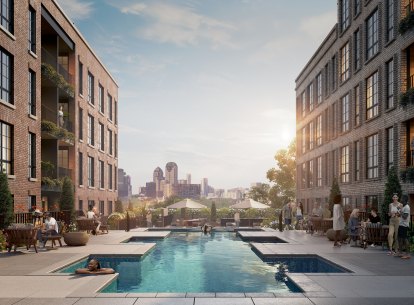
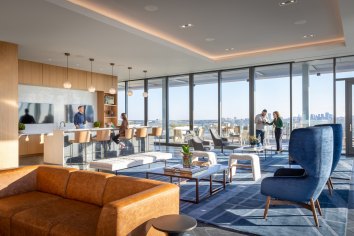
Another way this research has played out is in rethinking shared spaces like pools or rooftops. By necessity, these spaces are communal, and the typical model was very open and flexible. Now, we have started to carve larger outdoor areas into multiple smaller zones with defined uses so that individuals or small groups can use the area comfortably and intentionally without feeling like they are entering a large social gathering.
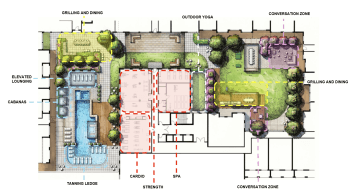
For the Westside Village development in Fort Worth, the amenity deck is divided into smaller, purpose-driven spaces that can be used by individual renters or small groups.
Rather than revealing entirely new amenity preferences, our research confirmed a broader shift toward amenities that prioritize individual comfort and personal choice. For Corgan’s multifamily practice, that means designing shared spaces as smaller, more intentional settings that feel personal within a larger community environment.
Location sells, design retains
One of the commonly-held beliefs among developers is that location is everything. However, our research revealed that renters actually rank both affordability and amenities higher than location. While access to work and neighborhood amenities like parks and restaurants is still an important consideration, financial pressures are increasingly shaping decision making — affordable apartments with amenities that help renters reduce additional costs (like a gym membership) are more attractive than a less affordable apartment in a prime neighborhood.
To attract renters, the design should be sensitive to location as part of the whole package: amenities, design quality, and integration into the neighborhood can offset location disadvantages and should be treated as a competitive strategy, not just an aesthetic add-on. Facades that coordinate materiality with their context and prioritize walkability and connection with the neighborhood are more appealing to renters.
Taking cues from the neighborhood and integrating them into the design can increase attraction.

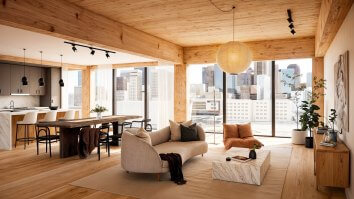
While the unit’s design is low on the list of features that attract renters, our research pointed to both design and apartment size as the most important drivers of retention. This has reinforced Corgan’s best practices for design: clean alignments, disciplined composition, and large façade openings for natural light are not just beautiful, they promote loyalty and retention. When units support established routines through adaptable layouts and comfortable, functional design, renters are more likely to stay. Conversely, if a unit’s design doesn’t fit the renter’s needs, they will leave. High quality design and construction aren’t added costs, it is an investment in the success of the development.
What's working
Since the widespread adoption of remote or hybrid work, developers have assumed that a dedicated, in-unit home office is a must-have for renters. However, the research indicated that renters simply need the option to work comfortably from home, whether that is a kitchen table, a nook for a desk, or an extra-large living space that can accommodate multiple activities. This reinforces design best practices that encourage retention: when apartment layouts are adaptable and spacious, renters can make the space work for them. Spaces that are too prescriptive may end up going underused, wasting square footage.
The assumptions and realities around hybrid work and coworking spaces mirror those around amenities. Like we saw with pool decks and rooftops, coworking spaces should be adjusted to better suit individual use rather than communal or social use. For residents who want to work from a third space (without spending extra money), smaller spaces that provide privacy and acoustic separation like phone rooms are preferred over large, common working areas. In our designs, this means limiting large conference rooms and using the space saved to add more individual workstations and even podcast studios for freelancers or content creators.
Retention drivers
With a fluctuating housing market and rental market, renters can feel stuck. The renters we talked to were concerned about affordability and looking for a place that delivers value and suits their specific needs. To meet these pressures, developers should prioritize value-focused amenities for individual use to drive attraction and invest in beautiful designs and adaptable layouts that drive retention.
Learn More
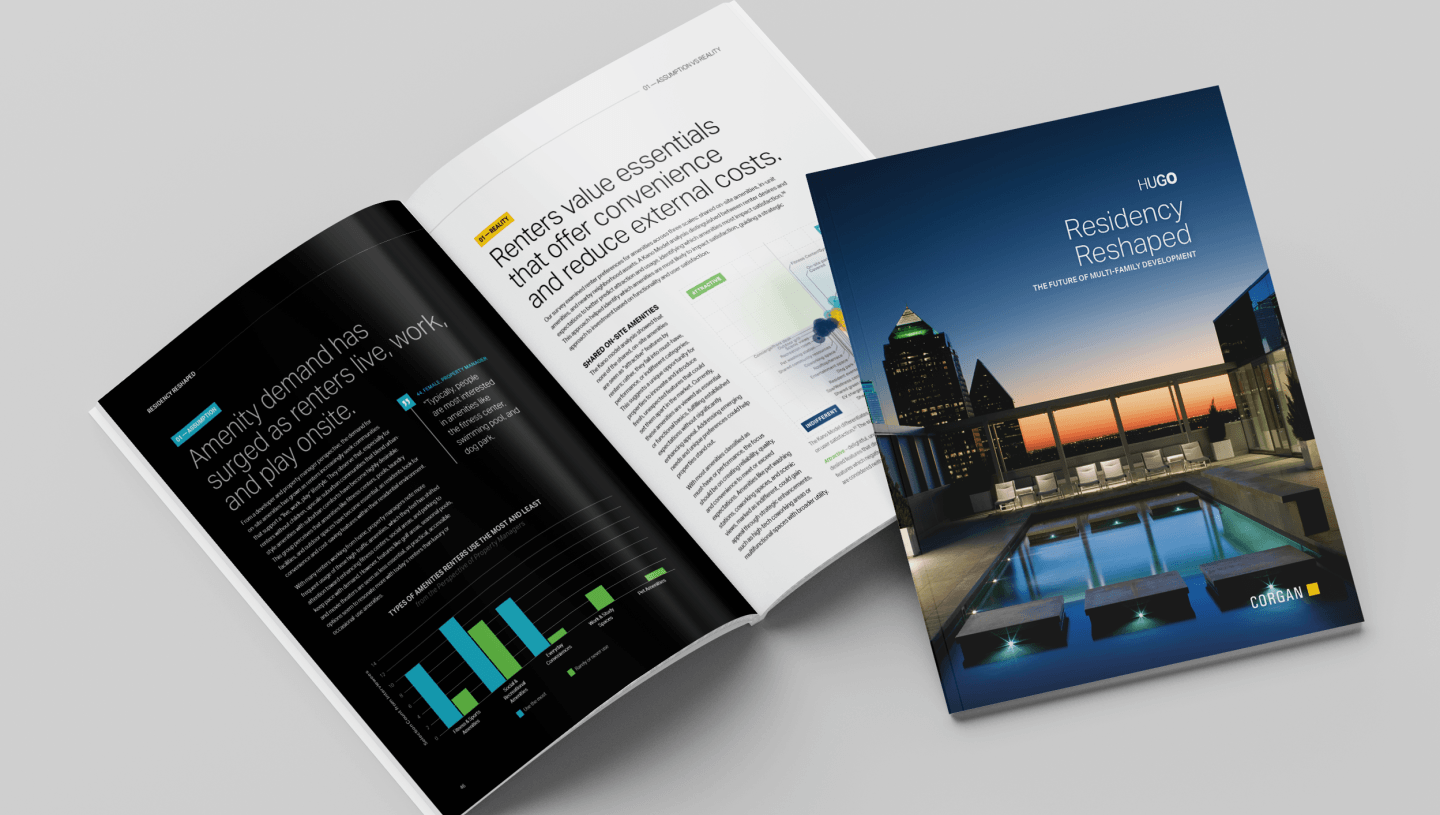
Read the full Residency Reshaped report here