

Cooler Together: A Layered Approach to Reducing Urban Heat
Cities are increasingly needing to respond to multiple, interconnected climate risks, often all at once. Extreme heat and surface-water flooding are affecting inland cities, while coastal communities are facing sea-level rise and storm surge. The risks differ by location, but they point towards an urgent design opportunity: rethinking infrastructure to address overlapping climate risks. Regenerative-city thinking takes this further by considering how climate-responsive infrastructure can strengthen environmental systems, public life, and long-term community well-being at the same time.
Echo, Corgan’s sustainability team, is exploring this opportunity through ongoing research in Dallas, using surface parking lots as a test bed for understanding how established urban heat mitigation strategies can be integrated together to deliver broader environmental and community benefits.
The Current Scenario
In Dallas, extreme heat makes the challenge of addressing urban heat islands especially pressing. In August 2024, approximately 100 community volunteers collected ambient temperature and humidity data along 21 routes covering 241.8 square miles as part of the City of Dallas Urban Heat Island mapping initiative. This initiative recorded temperatures up to 101.4°F and differences of up to 12°F across Dallas. Hotspots were identified across Downtown, Oak Lawn, the Medical District, West Dallas, South Dallas, and South Oak Cliff, with temperature differences of up to 10°F even in the evening 1.
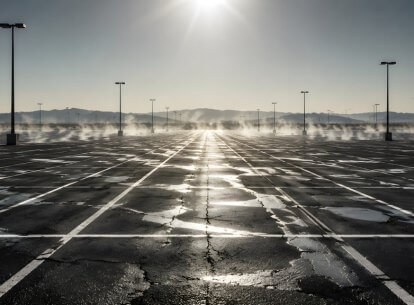
Within Dallas, surface parking lots present a particularly relevant place to intervene. Their direct solar exposure, dark pavement, limited vegetation, and extensive impervious surfaces contribute to both localized increase in ambient temperature and rapid stormwater runoff. Yet these same characteristics create an opportunity to rethink parking lots as multi-functional infrastructure, where a design and programmatic response not only mitigate climate change impacts, but goes beyond to create economically, socially and environmentally successful urban space.
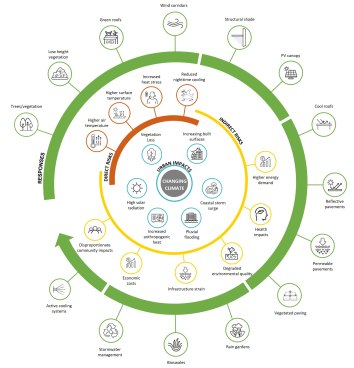
Figure 1: Climate Risks, Urban Impacts, and Responses
How the Built Environment Shapes Heat
Dark, impervious surfaces absorb solar radiation and release stored heat over time, while the location, density, and maturity of trees influence shade, air and surface temperatures, and evapotranspiration. Urban form affects airflow and nighttime heat release, while vehicles, mechanical equipment, and air-conditioning systems contribute to additional heat. How water is managed also matters, whether it infiltrates, evaporates, is retained on site, or rapidly enters the drainage system. Together, these interconnected conditions influence how hot a place becomes, the rate at which it cools and response to rainfall. The potential lies in changing the physical conditions that shape the local microclimate.
The consequences extend beyond environmental performance to how people experience and use these spaces. Corgan—Hugo’s earlier research found that more than 85% of surveyed residents in each of the Dallas study areas reported reducing outdoor activity during high heat. When heat influences whether people walk, gather, play, or simply spend time outside, microclimate moves beyond being solely an environmental consideration and becomes a key factor in comfort, accessibility, and the quality of everyday community life 2.
Why Parking Lots, and why Dallas?
Parking lots bring heat, stormwater, human exposure, and repeatability together in one familiar landscape. About 24% of Downtown Dallas is devoted to parking 4, compared with 17% in Austin and 42% in Arlington 3. This makes parking lots a significant opportunity for addressing heat, stormwater, and human exposure.
Parking lots are also part of the everyday pedestrian experience. Downtown Dallas has approximately 89,000 daytime workers, many of whom move through the city’s outdoor spaces during the workday.11 People cross parking lots to reach workplaces, schools, healthcare facilities, transit, retail, and community destinations. Their repeated components, including stalls, drive aisles, islands, pedestrian routes, and perimeter zones, create a consistent structure for developing and comparing solutions.
Parking lots are a useful typology for translating lessons among Sun Belt cities with extensive paved landscapes and increasing heat exposure.
Integration is the next opportunity
Echo conducted a literature review of academic research, field studies, modeling studies, municipal programs, industry publications, case studies, and precedents to examine established urban heat mitigation strategies. The review considered their documented performance, implementation constraints, climate and site conditions, and the metrics used to evaluate environmental and human outcomes.
The literature shows that individual mitigation strategies are already well established. Trees, constructed shade, reflective and permeable pavements, blue-green infrastructure, and active cooling systems such as misting provide different ways to reduce urban heat. The next research opportunity is to understand how these strategies should be combined and configured so they perform as an integrated system, and how that integration can improve both environmental performance and human experience.
A 2026 review of 116 studies found cooling of approximately 3.6–9°F for urban forests and 1.8–5.4°F for cool pavements 5. These ranges also show that the performance of strategies is context dependent, influenced by climate, coverage, placement, material properties, and surrounding urban form.
In a parking lot, this requires a broader evaluation framework that considers temperature reduction, shade coverage, pedestrian thermal comfort, runoff, planting health, maintenance, water demand, energy use, airflow, community benefit and operational constraints.
Measuring Human Comfort
This broader evaluation is important because outdoor comfort is not solely determined by air temperature. The Universal Thermal Climate Index (UTCI), a common thermal comfort metric, combines air temperature, humidity, wind speed, and radiant conditions to describe how outdoor conditions are experienced by the human body12.
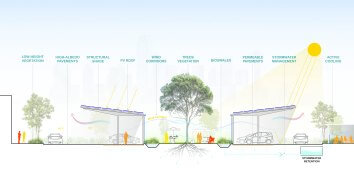
Figure 2: Layered UHI mitigation strategies
These factors help explain why a layered approach matters. Trees and canopies reduce solar and radiant exposure, vegetation and water support evaporative cooling, site configuration influences airflow, and pavement affects surface heat and reflected radiation. Active systems can provide targeted cooling. Each intervention changes a different part of the thermal environment, making human comfort a function of the system.
Literature review supports a layered approach to mitigation.
Layer 1: Natural Shade - Trees and vegetation
Trees form the foundation of the long-term mitigation strategy because they provide direct shade with evapotranspiration, stormwater management, ecological value, and improved thermal comfort. Their strongest thermal comfort benefit comes from reducing solar exposure and mean radiant temperature (MRT), which is the combined radiant heat a person receives from the sun and surrounding surfaces.
In France, an asphalt parking area was converted into a small urban forest with 72 trees and permeable paving. Field measurements found that UTCI- equivalent heat stress declined by as much as 11.2°F with the strongest daytime benefits linked to shade and reduced radiant exposure 7.
The performance of trees depends on soil volume, water availability, species, canopy geometry, maintenance, and the surrounding urban form. Dense planting can reduce airflow in some configurations. Trees should be treated as living infrastructure whose thermal, ecological, and hydrologic functions depend on adequate space and long-term care.
Layer 2: Constructed Shade
Where tree canopy will take years to mature, or where underground utilities, limited soil or maintenance constraints limit planting, constructed shade systems can provide immediate protection. Incorporating energy generation systems including Photovoltaic (PV) can be multi-purpose solutions that provide renewable energy while shading people, vehicles, and pavement.
Modeling of ten parking-lot scenarios in Fondi, Italy, found that combining light porous concrete, grass-grid paving, hedges, and mature trees reduced midday air temperature by more than 5.4°F and MRT by roughly 36°F compared with asphalt 7. The results show how constructed shade and vegetation can work together to provide thermal relief.
Layer 3: Performance Pavement
Pavement strategies address heat and water through different mechanisms. Reflective materials can reduce solar heat absorption and surface temperatures, while permeable systems can support infiltration, delay runoff, and contribute to evaporative cooling. Their significance is particularly relevant in parking lots, where pavement makes up a large proportion of the site. But a cooler surface does not necessarily mean a cooler person. High-reflectivity materials may reduce surface and near-surface air temperatures while increasing reflected shortwave radiation toward pedestrians 9.
Permeable pavement also depends on water availability and maintenance. Field monitoring in Taipei found substantial surface-temperature reductions on very hot days compared with conventional pavement 13. These trade-offs reinforce the need to integrate pavement strategies with shade, stormwater management, and ongoing maintenance.
Layer 4: Targeted active cooling
Misting, fans, and evaporative systems can offer rapid relief, but their strongest application is localized. Transit stops, seating areas, pickup zones, and building entrances are places where short-duration cooling can directly improve thermal comfort.
In a hot-humid field experiment, intermittent misting reduced air temperature by an average of 4.4°F. Participants experienced the greatest improvement in thermal sensation shortly after entering the misted area 10.
Because active cooling requires water, energy, controls, and maintenance, it is best targeted at high-use pause points.
The value of the layered approach comes from how the strategies work together. Pavement and bioswales can manage water runoff, trees and canopies provide shade, PV canopies add renewable energy, and active cooling can target high-use areas. Rather than treating the four layers as a rigid sequence, they provide an evidence-informed framework for prioritizing and combining interventions based on their potential to deliver the greatest value.
Testing Integrated Solutions
Based on the literature findings, Corgan’s next research phase will focus on configuring established mitigation strategies as an integrated system under representative Dallas conditions. Dallas parking lots provide a practical place to test integrated systems under real heat, rainfall, maintenance, water, and operational constraints.
Seen through a regenerative-city lens, the parking lot is a small but consequential example of a larger shift. Cities cannot address heat, flooding, ecology, energy, and public life as entirely separate problems. By rethinking everyday infrastructure, cities can address multiple climate challenges while creating healthier, more resilient communities.
References
City of Dallas. (2024). Urban Heat Island Study. Dallas Climate Action. https://www.dallasclimateaction.com/urbanheatislandstudy
Corgan-Hugo. We Need to Chill Out: Reducing the Heat Island Effect Through Design. We Need to Chill Out: Reducing the Heat Island Effect Through Design | Corgan
Erickson, B. (2023, May 4). A quarter of Downtown Dallas is parking lots. Could that change? Strong Towns.
Parking Reform Network. Parking Lot Map. https://parkingreform.org/resources/parking-lot-map/
Yuan, J., Antoszewski, P., Choryński, A., Gao, Y., Chai, J., & Kong, X. (2026). Urban heat island mitigation strategies: A comprehensive review of recent advances. City and Environment Interactions, 30, 100351. https://doi.org/10.1016/j.cacint.2026.100351
Parison, S., Chaumont, M., Kounkou-Arnaud, R., et al. (2023). The effects of greening a parking lot as a heat mitigation strategy on outdoor thermal stress using fixed and mobile measurements: Case-study project “Tertiary Forest.” Sustainable Cities and Society, 98, 104818. https://doi.org/10.1016/j.scs.2023.104818
Peluso, P., Persichetti, G., & Moretti, L. (2022). Effectiveness of road cool pavements, greenery, and canopies to reduce the urban heat island effects. Sustainability, 14(23), 16027. https://doi.org/10.3390/su142316027
Ghoniem, M., Fahmy, A., & Kamel, T. M. (2025). Evaluating urban surface materials: Albedo optimization and shading for pedestrian thermal comfort in hot-arid environments. Civil Engineering and Architecture, 13(6), 4331–4352. https://doi.org/10.13189/cea.2025.130616
Ye, Z., Liu, J., & Huang, Z. (2025). Identifying the best combination of vegetation and paving materials to improve the outdoor thermal comfort in a campus courtyard. Scientific Reports, 15, 20602. https://doi.org/10.1038/s41598-025-05742-2
Wang, P., Lu, S., Wu, X., Tian, J., & Li, N. (2024). Mist spraying as an outdoor cooling spot in hot-humid areas: Effect of ambient environment and impact on short-term thermal perception. Buildings, 14(2), 336. https://doi.org/10.3390/buildings14020336
Downtown Dallas, Inc. (2024). Downtown Demographic Profile: Dallas, Texas. https://retail360.us/dashboard/DowntownDallasInc/2024/DowntownDallasInc_Demos_2024.pdf
Copernicus Climate Data Store. Thermal comfort indices derived from ERA5 reanalysis. https://cds.climate.copernicus.eu/datasets/derived-utci-historical?tab=overview
Cheng, Y.-Y., Lo, S.-L., Ho, C.-C., Lin, J.-Y., & Yu, S. L. (2019). Field testing of porous pavement performance on runoff and temperature control in Taipei City. Water, 11(12), 2635. https://doi.org/10.3390/w11122635