

Hudson Yards Master Plan
Project Stats
- Location
New York, New York
- Size
28 acres
- Expertise
A long-term vision for the city’s growth
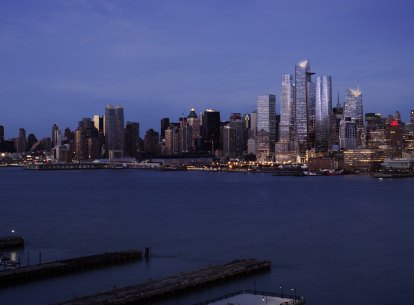
Hudson Yards is one of the largest development and construction projects in New York City history. Located on Manhattan’s far west side near Penn Station, this 28-acre swath of open-air rail yards had been the subject of intense redevelopment interest for more than half a century. Setting the framework for its phased development, design, and construction, the team prepared the initial urban design and zoning plan for the long-term transformation of this district.
The initiation of the Hudson Yards master plan was spurred by the recognition that Manhattan’s long-term growth required sites for mixed-use commercial and residential development — including a new generation of Class-A office buildings with large floor plates impossible to find in many established Manhattan business districts. Thus, the New York City Department of City Planning and the New York City Economic Development Corporation engaged a multidisciplinary design team to create a masterplan for the transformation of this long-underutilized area.
Crafting the framework for a Manhattan megadevelopment
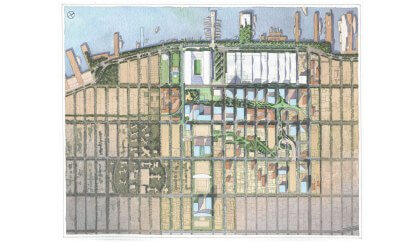
This team developed a comprehensive, integrated urban design plan for a vibrant new central business district and mixed-use community. The framework envisioned a built environment incorporating substantial commercial, residential, mixed-use, and cultural building projects with public open space and streetscape improvements. A key goal was to create lively street-level public realm opportunities, establishing a human scale and recapturing this area as a vital part of Midtown and New York City.
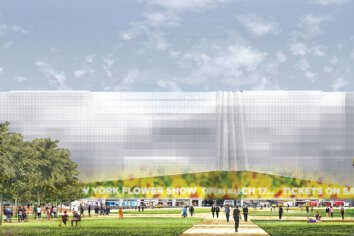
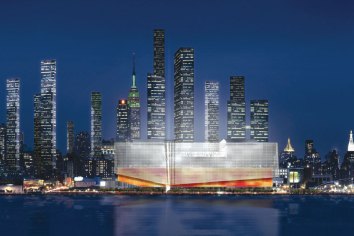
To conceptualize a new 40-block mixed-use neighborhood, the team’s framework centered on four interconnected public components. First, a proposed expansion of the 7 train to the center of the area will attract office users. A network of open spaces throughout the 40 blocks — including a mid-block street with developable parcels, two full-block parks adjacent to the Yards, and the elevated High Line linear park to the south — connects the development to Hudson River Park. A proposed convention center or stadium complex over the Yards will provide a civic and entertainment anchor. Finally, a new zoning approach encourages more density and taller buildings towards the river.
Intended to create an expansive public realm and stimulate adjacent private development, a majority of these recommendations were adopted and many — including the subway extension — have since been completed, while subsequent development and construction phases of Hudson Yards remain underway
Shaping effective zoning to drive success
Due to the complexity of developing the Hudson Yards site, which involved constructing extensive platforms above active rail yards, this initiative’s economic feasibility depended on the ability to build at a large scale and a high density. Crafting an effective zoning framework was therefore a foundational element of the project, and the resulting plan was developed with a goal of enabling up to 28 million square feet of new commercial construction and 12.6 million square feet of residential growth over several decades.
Working closely with public agencies, elected officials, and key stakeholder groups, the multidisciplinary team created a contextual zoning framework in which medium-height districts along the project site’s established, more residential eastern boundary stepped up in height and density moving towards the Hudson River and adjacent to recommended transit extensions. The plan also identified specific corridors for predominantly commercial, predominantly residential, and mixed-use development. All of the development to date has taken place within this initial zoning framework, and with the first phase of Hudson Yards opening in 2019 and subsequent phases ongoing, this megadevelopment has transformed Manhattan and fundamentally shifted the city’s commercial center of gravity.