


HCA Healthcare, Medical City Alliance Mental Health and Wellness Center
Project Stats
- Location
Fort Worth, Texas
- Size
65,600 SF
- Role
Architect of Record, Design
Architect
- Market
- Expertise
Architecture as a catalyst for belonging
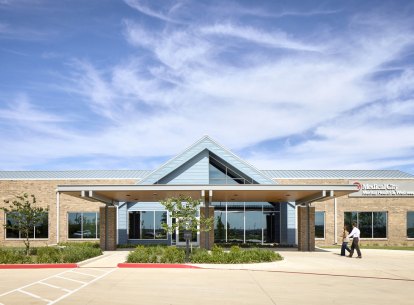
The new behavioral health hospital prototype for Medical City Healthcare, developed for its parent company HCA Healthcare, represents a transformative approach to mental health environments. Located just north of Fort Worth, Texas, and adjacent to Medical City Alliance, the 88-bed facility — expandable to 120 beds — addresses a long-underserved region with a model of care and mission to foster safety, autonomy, and healing while destigmatizing behavioral health treatment.
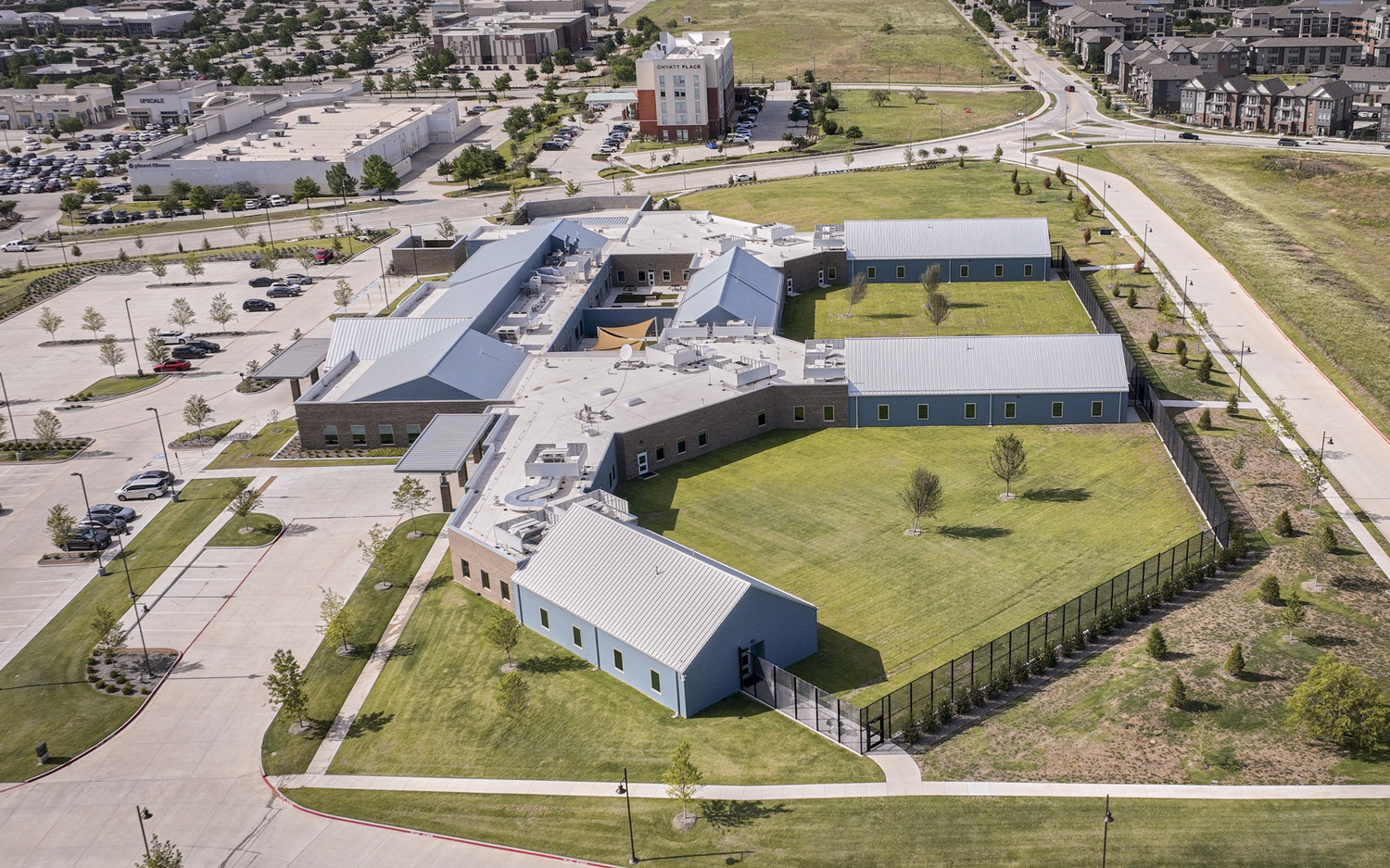
Strategically situated away from the main access road and positioned on the site’s high point, the facility captures expansive views while preserving opportunities for future growth. The placement reinforces both visibility and discretion, helping patients feel welcomed rather than exposed. The hospital becomes a trusted neighbor and resource embedded within the fabric of the community. To this end, the architectural language deliberately avoids institutional cues and instead reflects the residential character of the neighborhood. This contextual sensitivity is critical in reducing stigma; the building reads as familiar and approachable, reinforcing the message that mental health care is health care.
Safety through design
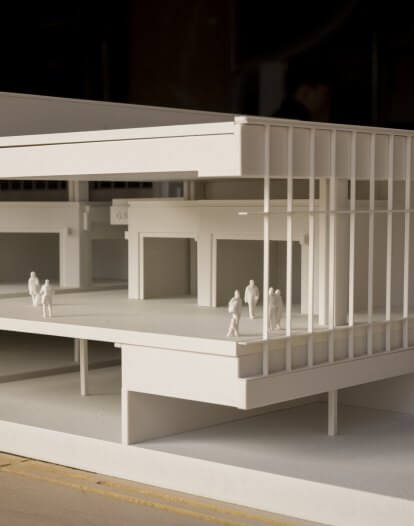
Integrating safety elements seamlessly into the space was cruical to support the feeling of a warm and welcoming design. The hospital’s pod-based layout clusters simple, home-like inpatient units around a central courtyard, creating a secure yet open environment. This configuration enhances visibility, shortens staff response times, and reduces patient stress by organizing the building into understandable, scaled neighborhoods. At the core of each pod, nurse stations are strategically positioned to maximize sightlines into corridors and shared activity spaces. The open desk design fosters interaction and trust, reinforcing therapeutic relationships, while its integrated safety features provide subtle protection for staff.
Material selections further reinforce safety objectives: finishes were chosen not only for aesthetics, but also for tamper resistance, durability and ease of cleaning. Fixtures, furnishings, and hardware are designed to minimize risk without appearing institutional so that they support, rather than detract from, the healing experience.
Wayfinding as empowerment
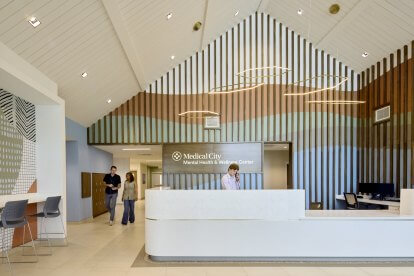
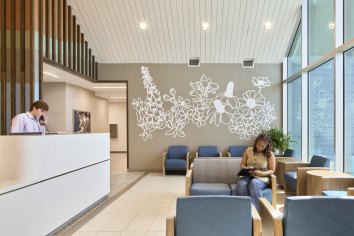
A welcoming portico marks the main entry, guiding visitors into a light-filled lobby crowned by a cathedral ceiling and floor-to-ceiling glazing, communicating transparency and calm. Wayfinding strategies — color-coded pods, architectural landmarks, and consistent visual connections to the central courtyard — empower patients to navigate independently within each neighborhood.
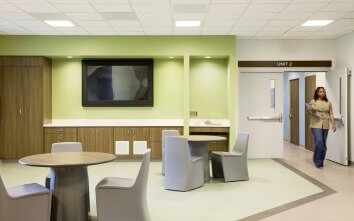

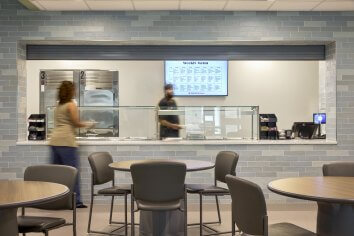
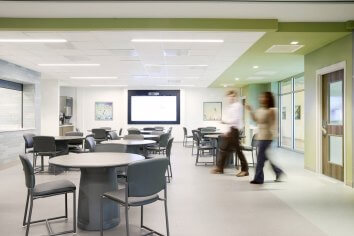
This clarity reduces anxiety and reinforces a sense of control, which is particularly important in behavioral health settings where individuals may feel vulnerable or disoriented. Visual access to outdoor spaces from nearly every point in the building strengthens orientation and connection to nature, grounding patients in their environment. Externally, a clearly defined boulevard entry separates patient arrivals from staff and service access points, simplifying wayfinding and reducing stress.
A healing environment rooted in choice
Central to the design is the patient courtyard, the heart of the facility. Serving as a shared nucleus, it brings daylight and visual rest to every part of the hospital and invites patients outside to engage with nature in a safe and secure way. Natural light from skylights and expansive windows throughout the building supports circadian rhythms and has been shown to reduce symptoms of depression and anxiety. The intentional material palette — featuring wood tones, natural stone, and subtle metallic accents — creates warmth without compromising durability. A custom mural by a local artist in the lobby anchors the building in its community, reinforcing belonging and shared identity.
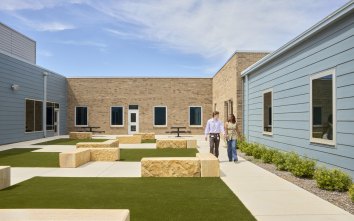
The layout and planning of the design offers meaningful choice, an essential component of recovery. Dual-occupancy rooms encourage social connection while maintaining personal space. Dining areas overlook the courtyard, reinforcing continuity between interior and exterior environments. Multiple seating types, alcoves, and activity spaces allow patients to select how and where they engage, supporting autonomy and self-determination.
Redefining behavioral health environments
Designed as a national prototype, the facility balances cost-efficient construction with long-term adaptability. Its modular pod organization allows for phased expansion and programmatic flexibility as community needs evolve. Support spaces are arranged to enable staff to move efficiently between units, maximizing operational agility and fostering collaboration. By integrating clinical expertise, stakeholder insight, and evidence-based design principles, the design team created a facility that supports therapeutic goals, operational excellence, and community integration. Every element — light, material, scale, circulation, and landscape — was shaped by a commitment to reducing stress and enhancing wellness. The result is a behavioral health facility that challenges outdated paradigms, replacing isolation with connection, institutional rigidity with flexibility, and stigma with dignity. The hospital stands as a model for the future of behavioral health care: safe for staff, empowering for patients, adaptable for evolving needs, and welcoming to the community it serves.