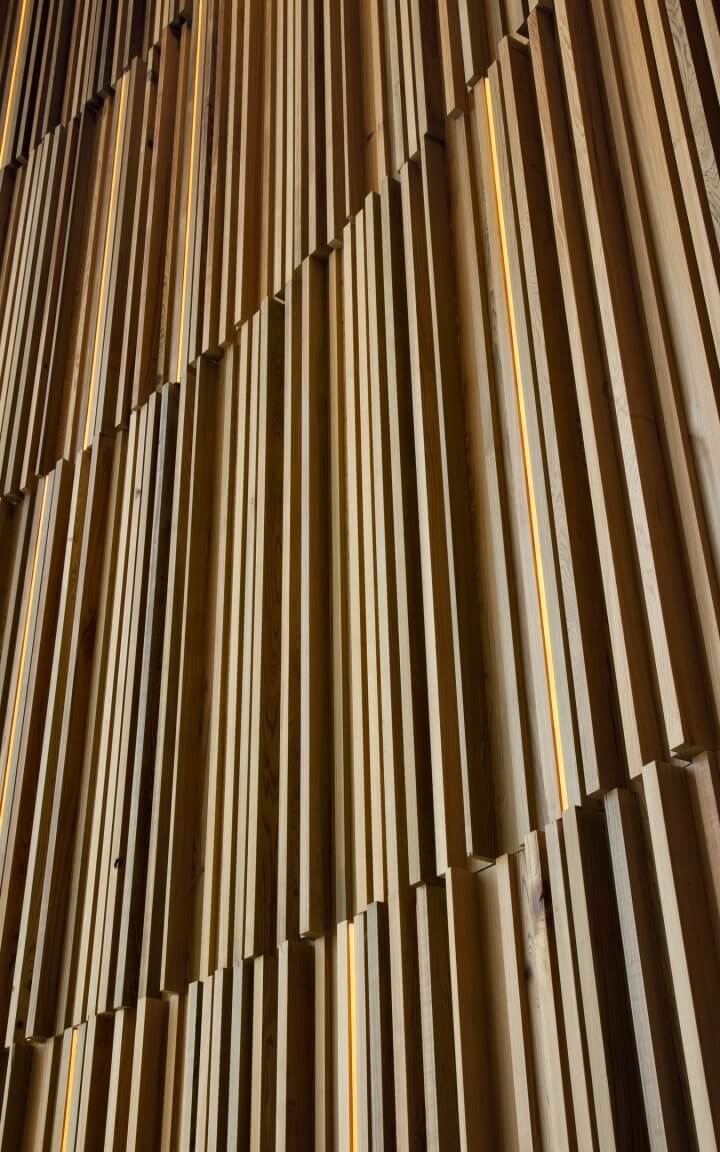


Buffalo AKG Art Museum
Project Stats
- Location
Buffalo, NY
- Size
New: 118,000 SF
Renovation: 45,000 SF
- Role
Executive Architect
- Awards
- Market
- Expertise
Thoroughly modern museum
Founded in 1862, the Buffalo AKG Art Museum is one of the oldest museums in the United States. To better display its world-class collection of modern and contemporary art and expand community access and engagement, the museum embarked on an ambitious campus expansion and modernization, adding more than 118,000 square feet and renovating another 45,000 square feet of gallery and support spaces.
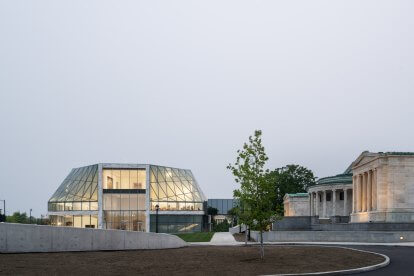
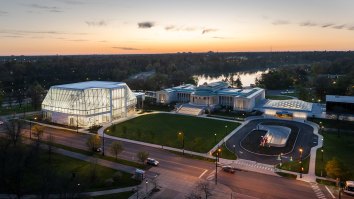
Designed by OMA/Shohei Shigematsu with significant input from the surrounding communities, this expansion and renovation creates a holistic cultural campus integrating art, architecture, and nature. Highlights include a new building to accommodate the museum's growing art collection, as well as a major renewal of the institution's 1905 neo-classical building by Edward B. Green and 1962 modernist expansion by Gordon Bunshaft, which now helps cultivate diverse programming.
Something old
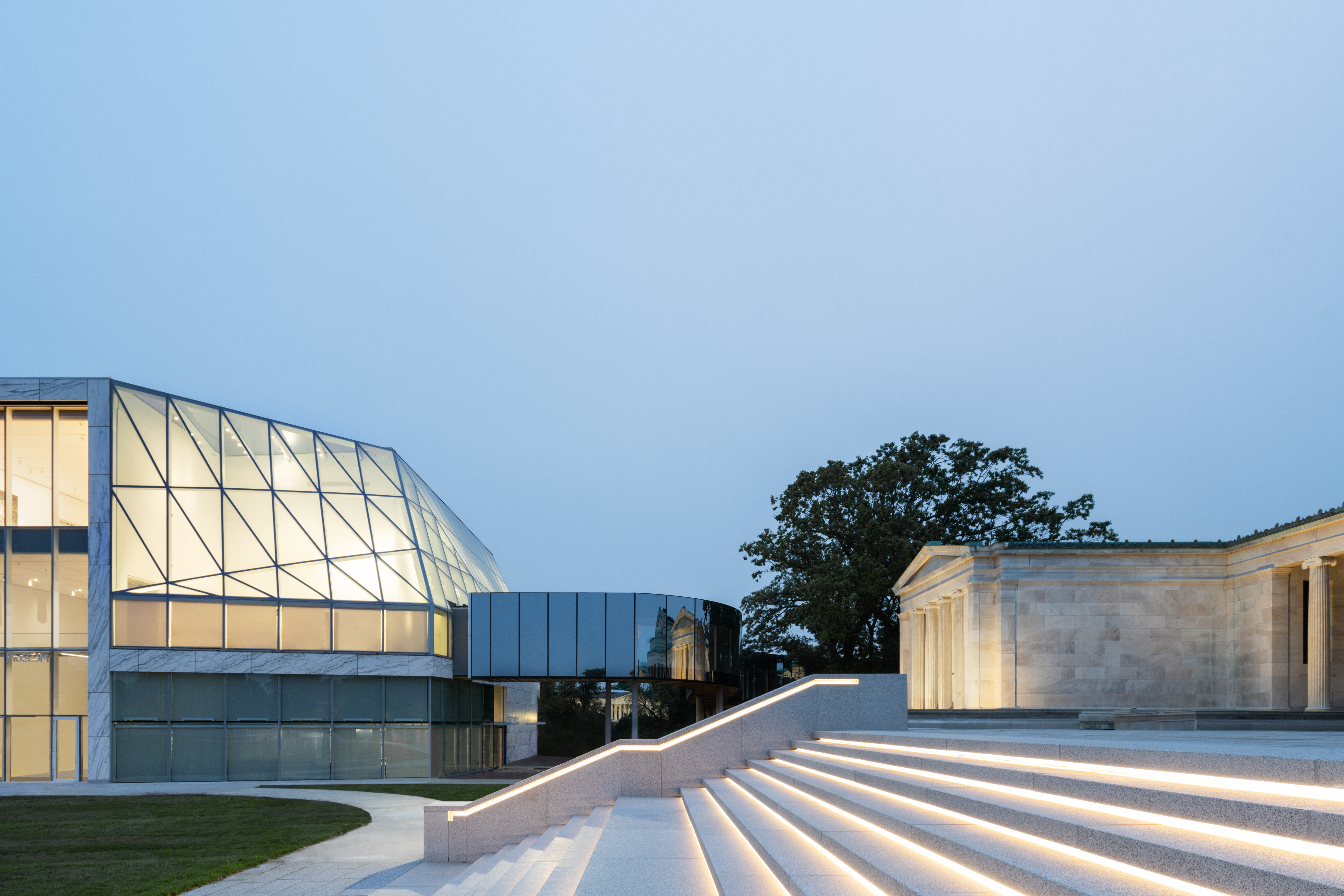
Significant renovations and modernizations of the museum's existing facilities were needed. For the 1905 Wilmers Building, work included major rehabilitations and updates of finishings, enhancements to visitor services and gallery acoustics, and upgrades to the buildings to increase accessibility. By adding a new underground parking structure, the design team was able to convert the existing surface parking lot into nearly an acre of lawn and enable the restoration of the neoclassical building’s original grand stair entry.
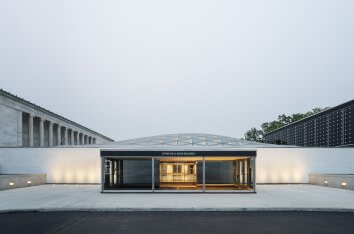
An additional point of entry was created on the eastern façade of the Seymour H. Knox Building, a 1960s addition to the original museum, creates a link between the city and the park. Interior renovations add 3,800 square feet of new classrooms, art studios, and new restaurant, and also renewed the 350-seat auditorium. The building’s formerly outdoor courtyard is now enclosed by the site-specific art installation “Common Sky” by Studio Other Spaces, facilitating use year-round.
Something new
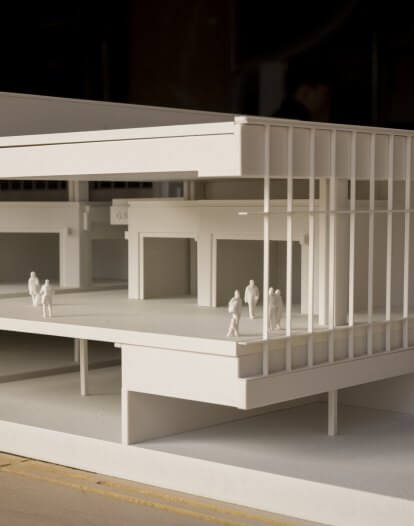
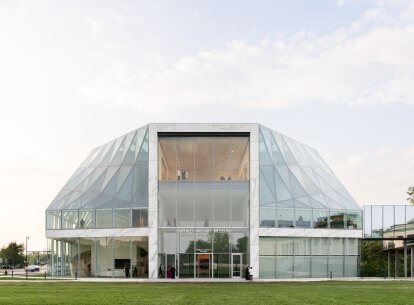
The new Jeffrey E. Gundlach Building adds 30,000 square feet of exhibition space across all three floors”, including a new state-of-the-art space for presenting special exhibitions. The expansion also incorporates several visitor amenities, a multipurpose black-box theater, staff offices, and art loading docks that serve all buildings on campus.
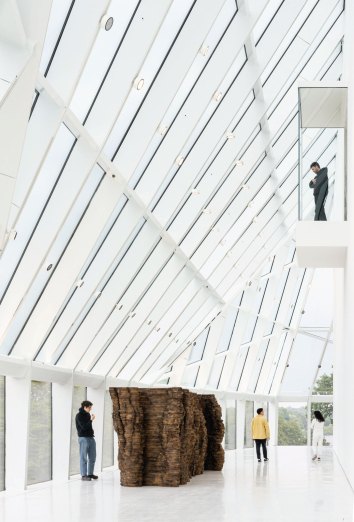
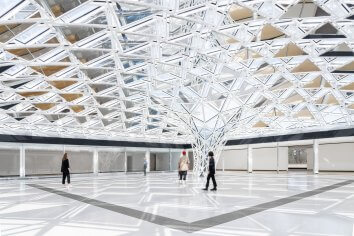
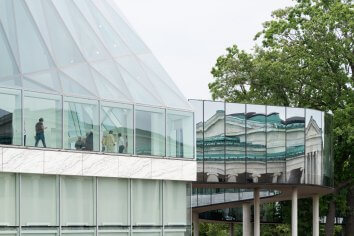
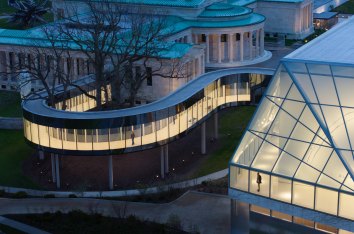
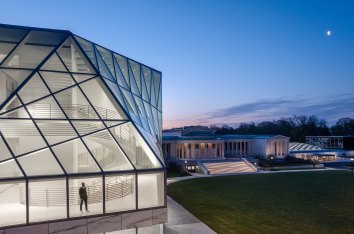
Around the center core of the building, a glass veil encloses a promenade, visually connecting the interior of the building with the surrounding Frederick Law Olmsted Delaware Park. To maintain an uninterrupted façade, all key systems are integrated into the exterior structure. Entrances are located at both the ground level and from the subsurface parking garage, connecting the museum to both foot traffic and drivers.
The lower-level lobby connecting parking to ground level is adorned with the site-specific commission “Others Will Know,” a woven tapestry installation by Swedish artist Miriam Bäckström.To fully integrate the new building with the rest of the campus — and to the public — an elevated, ADA-compliant serpentine bridge connects the new building to the existing campus. The John J. Albright Bridge weaves around the campus’s historic oak trees, enabling the movement of both visitors and art between the new and old galleries.
This project was completed by Cooper Robertson prior to its acquisition by Corgan in November 2025. Photo credit belongs to Jason O'Rear and Marco Cappelletti.
AWARDS
2024 The Chicago Athenaeum, The American Architecture Award
2024 The PLAN Award, Finalist
2024 Grands Prix du Design, 17th Edition, Bronze Award
2024 SARA New York, Design Award of Honor
2023 Architect’s Newspaper, Best of Design Editor’s Pick