
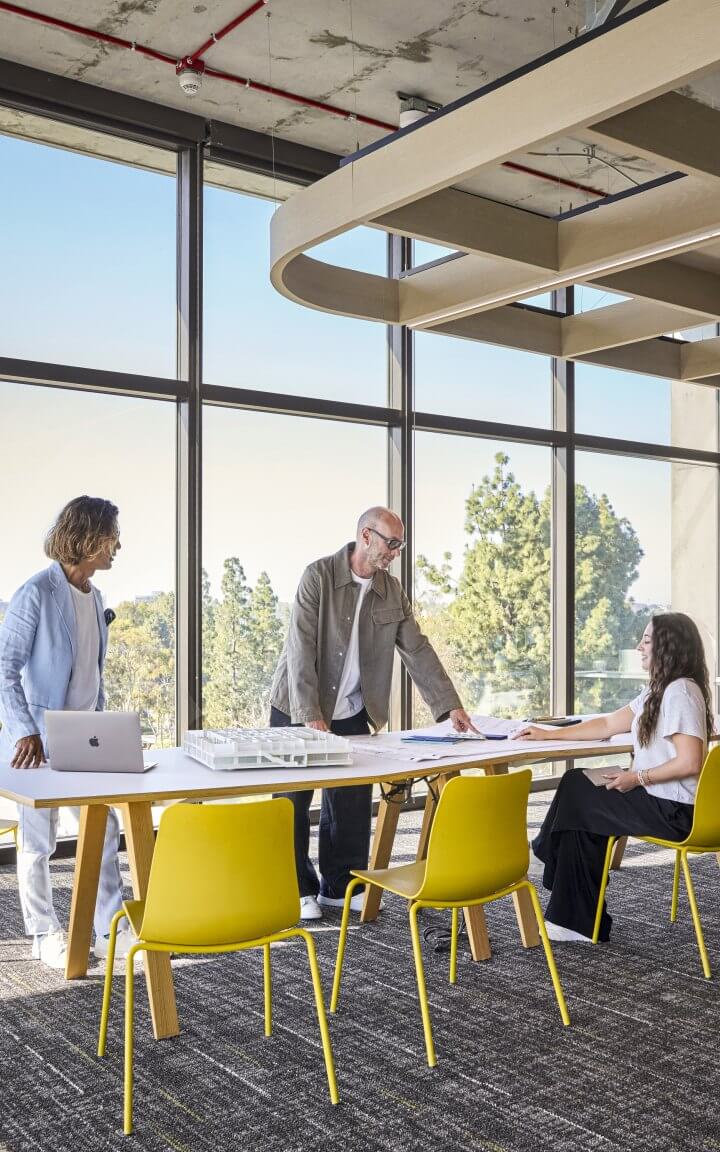
Leading with Low Carbon Design — How Corgan’s New York Midtown Studio is at the Forefront of Sustainability
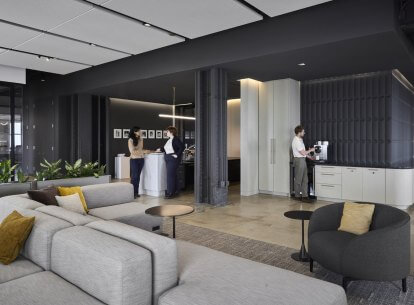
Corgan’s New York Midtown studio stands as a testament to purposeful, forward-thinking design. The 54th floor renovation reflects the studio’s firm commitment to reducing environmental impact, advancing occupant well-being, and establishing a new benchmark for sustainable interior renovations —demonstrating that high-performance design and responsible practice can go hand in hand.
Energy performance
Decarbonization was a foundational priority from the earliest stages of planning for Corgan’s New York Midtown studio. Across the expanded space, meaningful operational energy reductions, diligent material Global Warming Potential (GWP) tracking, and long-term performance verification were integral to the design team’s sustainability strategy. Carbon-conscious decisions were embedded into every phase of the process from the beginning, including an annual energy analysis that was conducted and refined across multiple iterations, targeting a 50% reduction in projected energy use compared to similar area properties in the city as catalogued by New York Local Law 84.
Designed in close consultation with the high-performance design guidelines of Empire State Realty Trust (ESRT), significant energy-saving measures were taken by Corgan, including Energy Star for Tenant Spaces compliance, LED lighting with advanced daylight dimming controls, high-efficiency workstations with sleep modes, new ventilation systems with energy recovery, and a design anticipating forthcoming connection to new all-electric central heating plant within the Empire State Building.
Reducing the carbon footprint
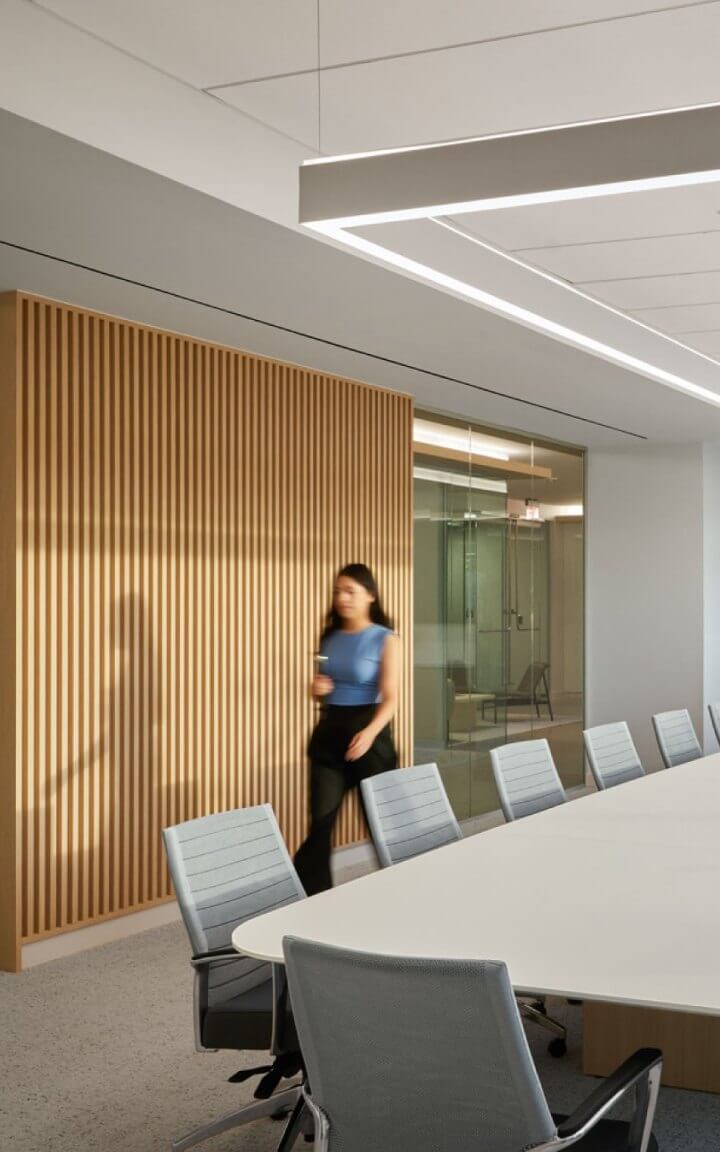
Thoughtful material selection and a commitment to reuse and recovery shape each phase of construction from the outset of demolition. High carbon-impact materials, including gypsum board, metals, ceiling tiles, and carpet, were identified and evaluated against lower carbon alternatives in close collaboration with manufacturers and product representatives. Strategic design decisions further amplified impact: replacing traditional acoustic ceiling tile with sprayed insulation reduced embodied carbon while simultaneously yielding higher ceilings and a more expansive feel. Additionally, the team chose to expose and finish the existing sub-floor rather than new carpet that is a common contributor to embodied carbon in office projects. More than 80% of original glass markerboards were retained and reused, avoiding unnecessary manufacturing and cost.
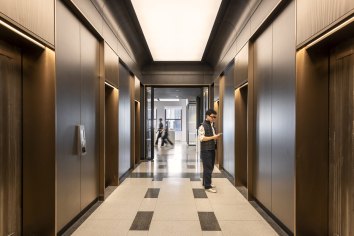
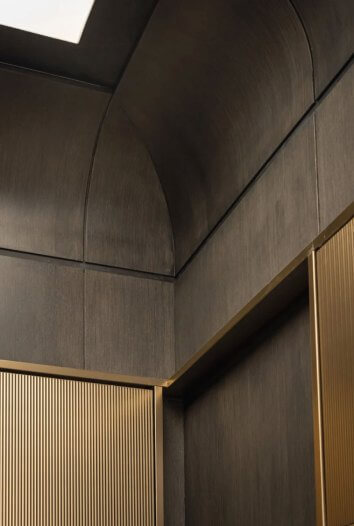
Throughout construction, all finishes and performance materials were reviewed with general contractor partners to align decarbonization intent, streamline carbon tracking workflows, and validate final emissions estimates. Material quantities and verified environmental data were compiled using One Click LCA’s Life Cycle Carbon North American tool, an IFLI-approved platform, to calculate the renovation’s complete embodied carbon footprint.
Clear standards
The studio was designed to the International Living Future Institute’s Zero Carbon Certification (ILFI ZC) standard, an industry benchmark that verifies the reduction, elimination, and offset of all operational and embodied carbon emissions across a full 12-month performance period. Clear material category GWP limits were also established within project specifications, providing the contractor team with defined carbon caps that reference reductions against industry averages. Sustainability reporting forms ensured comprehensive documentation, EPDs, HPDs, Cradle2Cradle, FSC certification, and low-emitting product data to maintain full transparency across all materials. Construction energy was also logged, tracking all powered equipment by tool type and estimated hours of use. Additionally, the studio expanded its composting and recycling programs in partnership with the building, introducing dedicated composting stations and standardized recycling across all work areas to further reduce waste-related emissions.
The New York Midtown studio represents more than a workplace transformation; the workspace is a demonstration of what intentional, carbon-conscious design can achieve. By integrating sustainable strategies across energy performance, material selection, and everyday operations, Corgan has established a model for responsible design that prioritizes both environmental impact and the people who inhabit the workspace.