

Research Report ─ Workplace Design for Inattentive-type ADHD
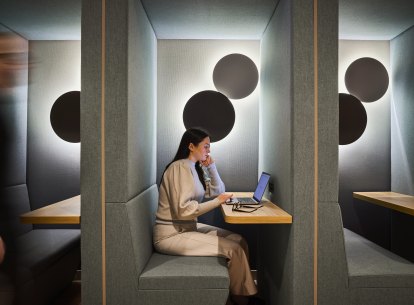
New research from Corgan and the University of Arkansas explores how workplace environments shape attention, revealing design strategies that support focus, and create more adaptable workplaces.
As conversations around neurodiversity continue to shape the future of work, attention is increasingly understood as something shaped by both people and the environments around them. Neurodiversity encompasses a wide range of cognitive differences, including variation in attention, sensory processing, learning, and regulation. For adults with ADHD, workplace environments can play an important role in shaping attention throughout the day. When environmental demands are poorly matched to cognitive needs, the added effort required to manage those demands compounds over time, contributing to fatigue and reduced focus that ultimately affects performance at a workforce level.
Supported by the AIA Upjohn Research Initiative and conducted in partnership with the University of Arkansas, this EDRA CORE recognized study explores a simple question: What if focus isn't just a skill, but a setting? Using inattentive-type ADHD as a lens, the research examines how workplace environments shape attention and what those findings can teach us about designing spaces that support a broader range of people and work styles.
Research Methodology
The research team examined how physical workplace design shapes attention for adults with inattentive-type ADHD, using a mixed-methods approach that moved beyond perception alone to incorporate measurable cognitive data. Following International Review Board approval, 20 participants with ADHD completed standardized cognitive tasks across both open and enclosed office environments. while experiencing a series of spatial, ergonomic, and environmental interventions.
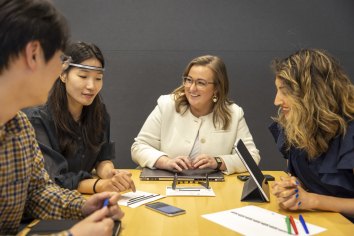
The study combined cognitive testing with EEG monitoring, wearable physiological sensors, behavioral observation and self-reported surveys. By examining attention through multiple signals, researchers were able to compare how participants perceived their experience with measurable cognitive and physiological responses. Two design workshops further connected the research to practice, helping translate findings into testable interventions and, ultimately, workplace design recommendations.
Insights
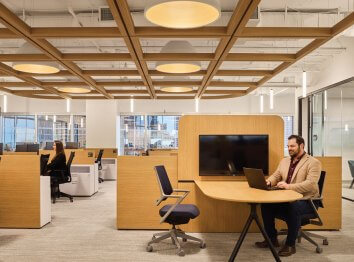
Four insights emerged as the most influential. Lighting set the cognitive tone: diffused, layered lighting with dimmer direct and brighter indirect sources supported calmer, more sustained attention, while bright, uniform lighting increased distraction and eyestrain. Movement helped only within limits — subtle, self-directed motion such as posture shifts or foot-tapping supported engagement, while effortful or continuous movement, like active seating, increased fatigue and reduced focus.
Visibility and enclosure needed to be balanced rather than maximized: participants concentrated best when they had awareness of their surroundings paired with a sense of backing or protection, consistent with prospect-refuge theory, while excessive exposure raised vigilance and cognitive load, sometimes without participants even realizing it. And sensory inputs functioned as a system rather than in isolation — an orange scent intervention boosted attention but also raised arousal, while acoustic hoods reduced both auditory distraction and visual exposure simultaneously, reinforcing that lighting, sound, and scent need to be considered together.
Designing for Focus
The findings reinforce a simple idea: attention is shaped by the environment. By exploring how adults with inattentive-type ADHD respond to workplace conditions, Focus by Design reveals opportunities to reduce unnecessary cognitive load and create balanced, adaptable settings that support focus across a wider range of people and work styles.
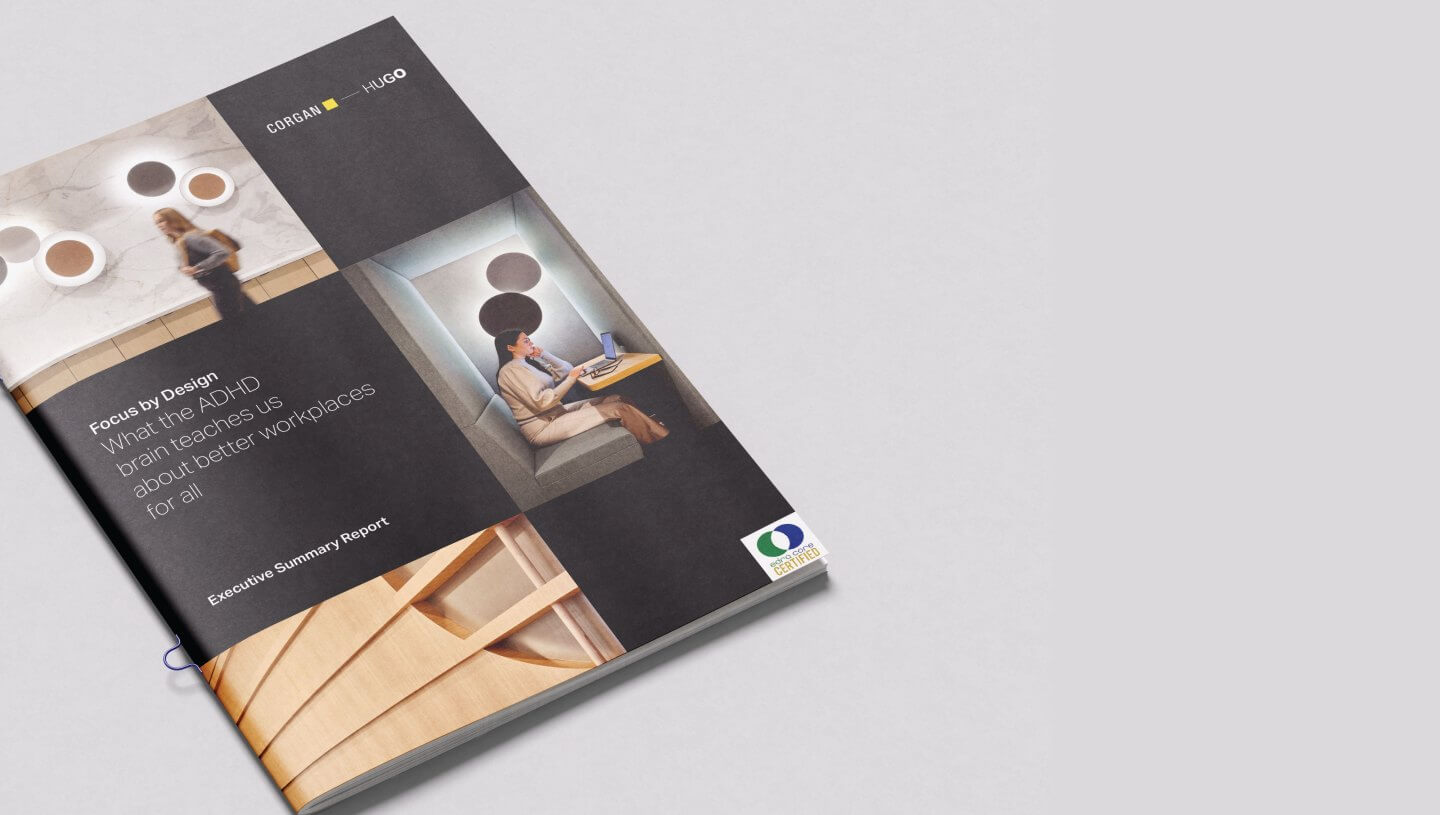
As neurodiverse needs become more visible, they are shaping conversations about how workplaces support different ways of thinking, focusing, learning, and processing sensory information. To learn more about designing for these needs, read Hugo's full report.
Acknowledgements
This research was a collaboration between academia and industry to advance understanding of how workplace design can support neurodiverse groups. The team extends sincere thanks to the University of Arkansas and the many advisors and industry partners whose contributions shaped the study—from design and strategy input to material support. Funding support was provided by the AIA Upjohn Research Initiative.
Melissa Hoelting, Assoc AIA, WELL AP, ASID, Senior Associate and Assistant Director, Hugo
Yashaswini Karagaiah, Assoc AIA, WELL AP, LEED Green Assoc, Design Researcher III
Mahdi Afkhami, Ph.D., Design Researcher IV
Samantha Flores, AIA, NCARB, RID, Vice President and Director, Hugo
Jinoh Park, Ph.D., MBA, NCIDQ, WELL AP, Assistant Professor at University of Arkansas
Marjan Miri, Assistant Professor at Drexel University
Michelle Boyoung Huh, NCIDQ, MID, Assistant Professor of at Virginia Tech