

Building a Career in Data Centers
With more than 20 years of experience in data center architecture, engineering, and owner operations, Jon Lichtenfels, Data Centers Studio Leader in Corgan’s Atlanta office, has a unique perspective on the industry’s booming growth and future. Jon reflects on the changes the industry has seen over the past two decades — and the relationships that endure.
More than infrastructure
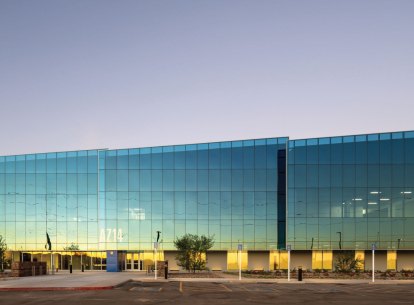
In the past several years, data centers have gone from being a relatively obscure piece of infrastructure to being one of the most talked about industries in the world, yet when most people think about data centers, they don’t always know what to picture. They’re not buildings the public typically sees or walks into, but they play a role in almost everything we do. In our increasingly digital world, data centers facilitate much of modern life: every financial trade, medical record, and streamed college basketball game runs not through a cloud, but through a physical building.
Though data centers may seem new, Corgan has been involved in the design and construction of these highly technical, secure facilities for nearly 50 years, since its first data center in 1979. As data center designers and architects, we are enabling the digital economy through thoughtful, resilient design. Data centers are a foundational part of the world we live in today, and International Data Center Day exists to help more people understand just how important that work really is. After working in this industry for more than 20 years, I have seen many changes, but its core of collaboration and community has remained the same.
Community over competition
In the course of my career, I’ve experienced the data centers industry from a number of angles, working alongside engineers, collaborating with partners, competing for projects, and hiring talented individuals from across the industry. Through all of it, one thing has stayed consistent: it’s a small, connected, relationship-driven world. Owners, architects, engineers, builders, and operators work closely together, often across multiple projects and years. Because of this, your character and reputation are just as important as your technical skills. Over time, you will realize that you’re not just designing buildings — you’re building trust and long-term professional relationships.
While working at another firm early in my career, one of the first data center projects I lost was to Corgan. At the time, it was just a tough loss. Looking back, it’s a great example of how interconnected this industry is, because today, I’m proud to be part of that same team I once lost to. That level of interconnectedness is what makes this industry unique. Former colleagues become clients. Mentors become competitors. Competitors become partners. And when you reconnect at industry events, it feels more like a reunion than a room full of strangers. That’s part of what’s kept me in this field. In many industries, competition creates distance. Here, it often creates respect.
Change is the only constant
From an architectural standpoint, the work is different than in a typical project. Data centers are considered critical infrastructure in our society, so designing a data center means prioritizing reliability, flexibility, and speed above all else. Every decision is made through the lens of uptime, redundancy and long-term operational performance while maintaining constructability and cost efficiency. The pace of delivery is also fundamentally different from other markets. Traditional design phases often blur in this environment and become less about linear milestones and more about enabling procurement and construction. To enable speed to market, we structure our deliverables around early release packages so that construction can start while design is still advancing. As a result, a large-scale data center can move from early design to active construction within a few months and reach design completion in roughly four to six months overall.
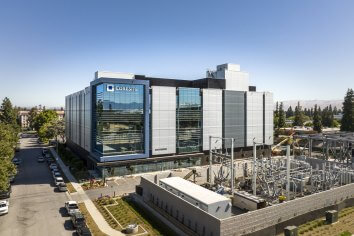
At the same time as projects are being built, the industry’s needs are constantly evolving, and our work evolves along with it. Cooling technologies, chip density, local ordinances, AI projections — all of these facets and more are changing so quickly that the ask for a data center may change between kickoff and construction. What worked on the last project doesn’t always apply to the next, so we are constantly refining how we design and build to keep up. A seemingly small decision, like the removal of generators from portions of a design, can dramatically alter the required acreage and overall campus planning strategy. Decisions like this ripple through the entire project, necessitating a team that is quick on its feet and prepared for anything. That combination of speed and constant improvement is what makes the work both challenging and rewarding.
Building the future
As architects, we hone our skills to solve complex challenges — programmatic needs, site limitations, budget constraints — regardless of the building type. As data center designers, we get to apply those skills to shape the physical foundation behind the digital world, and we get to do it together. International Data Center Day shines a light on an industry that operates behind the scenes and highlights the range of careers available from architecture to construction to operations.
Looking back at my experience in this industry, I’m grateful for the facilities we design, but I’m even more grateful for the people I’ve had the privilege of working with. Even the most technically demanding projects — maybe especially the most technically demanding projects — come down to the people and our shared commitment to getting it right. At Corgan, we’re fortunate to be right in the middle of that momentum, working alongside great clients and partners to help shape what’s next in the data center space. If you’re looking for a place where you can move fast, work with great people, and be part of something that’s only getting bigger, we'd love to have you on the team.