




Residency Reshaped Examines the Pressures and Priorities Shaping London’s Rental Market

Bringing Residency Reshaped to London
In 2024, Hugo, Corgan’s research and innovation team, conducted a foundational study, Residency Reshaped, which focused on understanding renters’ needs and preferences in six cities across the southern United States. In 2026, the team applied the same approach in London to gain a better understanding of the factors influencing renters’ priorities. As affordability pressures and barriers to homeownership continue to shape the London market, the study offers a deeper look into the factors that shape housing choice, resident satisfaction and retention. The research also examines the true influence of location, amenities, remote work, technology and design on renter’s priorities.
Methodology
Residency Reshaped: London uses the same framework as the original report, combining a literature scan, in-depth interviews, a large-scale survey, and detailed data analysis. The secondary research establishes the socioeconomic context of the city’s rental market. Interviews with renters, developers, and building managers, as well as a survey targeting renters in London, provide greater insight into the realities and preferences that are currently shaping renters’ experiences. By integrating quantitative data with qualitative insights and using thematic analysis to identify recurring patterns, the study generated a robust understanding of the market, areas of alignment across stakeholders, and gaps between the developers’ expectations and renters’ realities.
I prioritised having a big enough living room for my desk. I didn’t like having my desk in the bedroom because it felt like work was always with me and having extra room would have been significantly more expensive.
It was important for me to have a living room big enough and something that was close to the centre of London for shorter commute.
Exploring key findings
By exploring topics such as hybrid work, the value of location and access, and the practiality of amenities, the report provides insights into what attracts and retains renters as well as the impact of current economic conditions on renting versus owning. These findings were translated into several key insights that challenge the assumptions made by building managers and developers. The report includes design strategies for each insight to better align new developments with renters’ lived preferences.
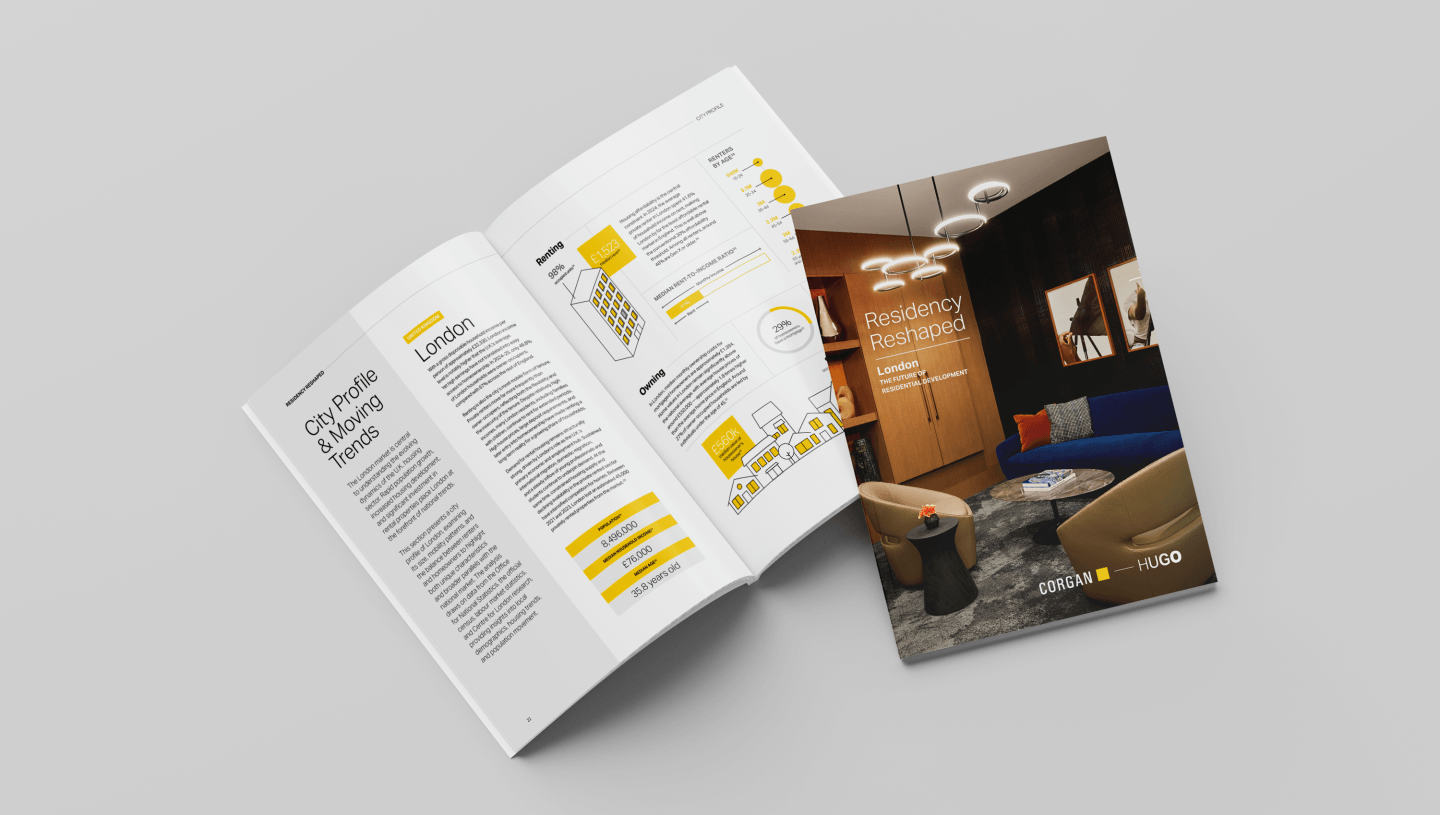
Read the full report to explore the insights, implications, and opportunities in greater depth.
Read Here